
Bref aperçu de Guillaume Bottazzi – Brief overview Artworks

Actualités – News
The project that is changing the way we see slag heaps

La vie en rose: when an artistic dream clashes with the pragmatism of elected representatives
A monumental project, from the Belgian border to the slag heaps of the Nord
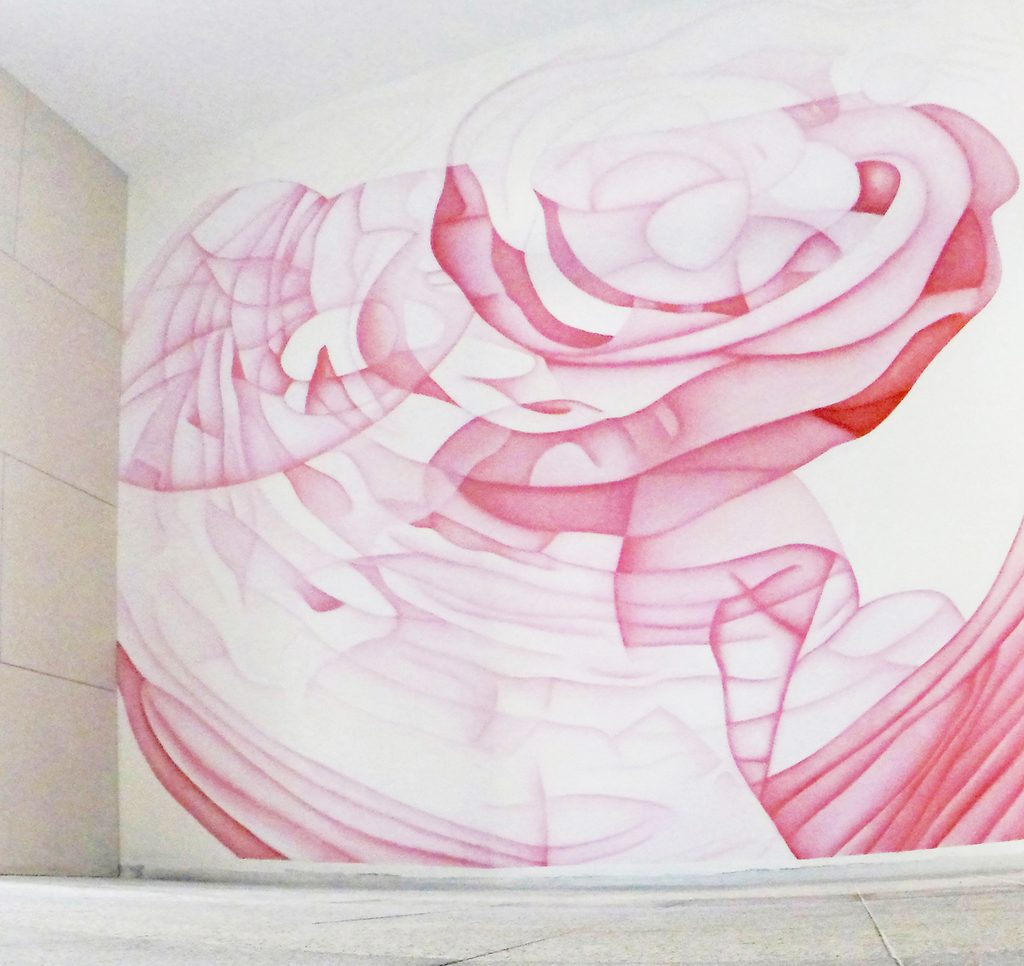
It was to be one of the most extensive poetic works ever conceived in France. A colourful, plant-based mural intended to stretch across the country from west to east, crossing the Belgian border, over several hundred kilometres.
Le Parisien Étudiant • Events Calendar • Montpellier • Heritage Days
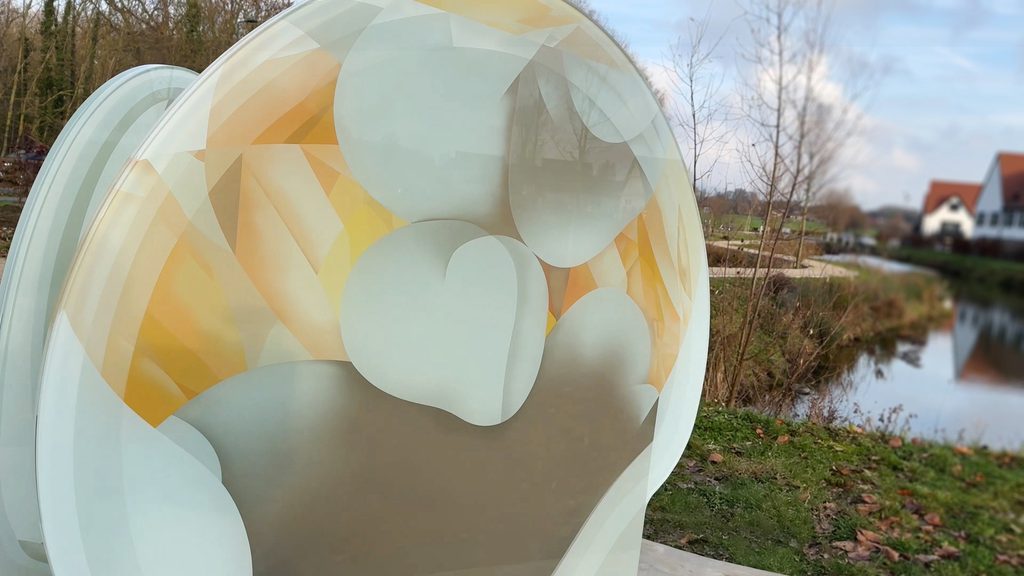
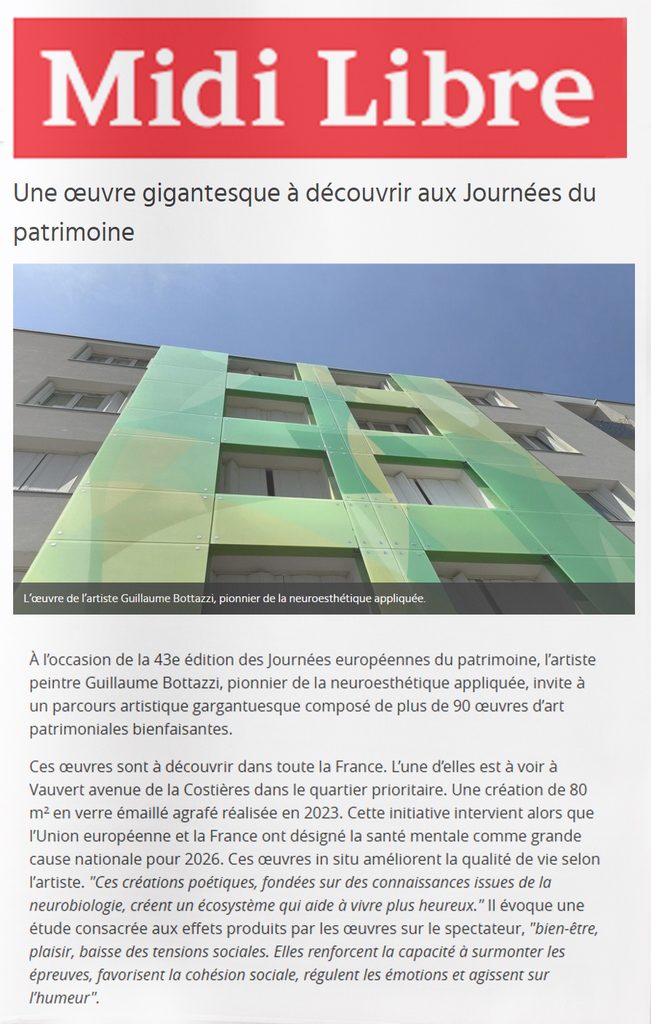
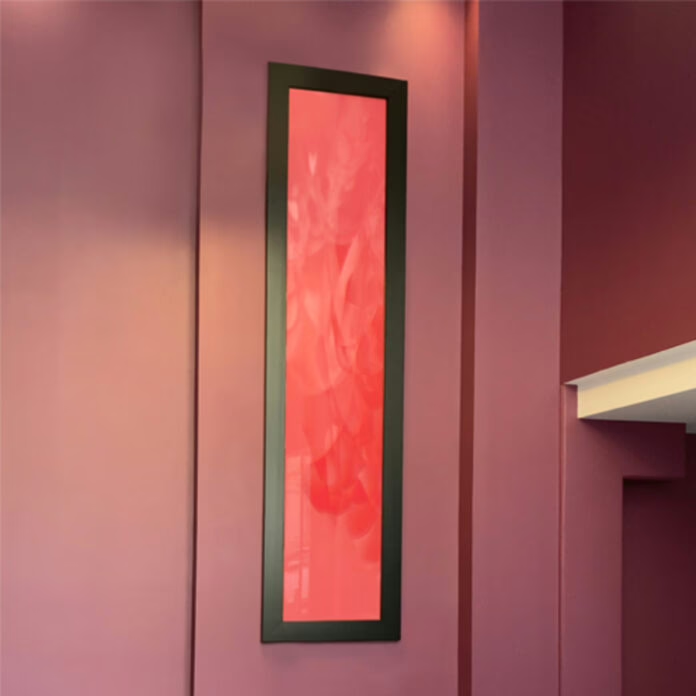
‘Admire a work of art in the form of an 80m² showcase, created by Guillaume Bottazzi’

Going out in Paris ” Dreamlike ceramics by Guillaume Bottazzi in VincennesGoing out in Paris”
In process

AI, an artist? It doesn’t work – here’s why

Our sensory organs tell us what we like and what we do not like. Sensory perception refers to the process by which the nervous system detects, organizes and interprets information from the environment via our sensory organs. The insula, the oldest part of the brain, contributes to a wide variety of functions and, in particular, modulates emotional and sensory information (pain, self-awareness, addiction, etc.).
Aesthetic judgement involves very ancient regions of the brain. Eating chocolate that we love, listening to music we enjoy or looking at a work of art we find beautiful all activate the same reward system.
The stages of recognising beauty consist of reward and emotion, sensation and perception, culture and experience.
If you like something, if you find it beautiful, that experience will change your brain and you will learn something.
We activate mirror neurons when we look at a work of art, and if you look at Caravaggio’s painting above, you might feel disgust or fear. And this is because we activate mirror neurons that lead us to have that sort of impression.
According to Oshin Vartanian, an experimental psychologist at the University of Maine in the United States, 85 per cent of judgement stems from the viewer’s personal experience, which explains why they seek to understand the artist’s intention. When people are told that a work has been created by an artist, they like it more. Conversely, when they are told that a work has been created by an AI, they like it less. And this is the case even when they are looking at the very same thing.
Authenticity and forgery alter appreciation, and the same phenomenon applies to just about everything: whether one is looking at a real log fire or a replica; whether one is looking at a replica or an original, and so on.
Many neuroscientists agree on this point: the fake diminishes appreciation, whilst reality alters it.
If AI steals works from the internet to create a patchwork that refutes ‘singularity’ – the quality specific to the individual, to use Gaston Bachelard’s words – as well as creativity and originality, it cannot replace the artist, because our mirror neurons are essential to aesthetic judgement.
PharmaSphere

MEDI-SPHERE