


Bref aperçu de Guillaume Bottazzi – Brief overview Artworks

Actualités – News
Coming soon to bookshops: ‘Guillaume Bottazzi: The Visionary Artist Who “Heals” Our Brains’
By our editorial team: M.V
In an urban world saturated with often aggressive visual stimuli, one man has decided to transform our cities into veritable ‘mental spas’. Guillaume Bottazzi, a French artist born in 1971, is not merely a creator of forms; he is a pioneer of applied neuroaesthetics. A portrait of a giant of public art whose works are now being prescribed by scientists.
A Giant of Public Art: 180 Works Across the Globe
With over 180 monumental works forming part of the heritage of major cities around the world, Guillaume Bottazzi has established himself as one of the most prolific artists of his generation.
Is Guillaume Bottazzi’s art good for us?
Before you continue reading this, please take a look at the space around you. You are most likely indoors. How did we guess this? Well, today most people spend close to 90% of their life inside buildings. Moreover, it is also likely that most of the objects that surround you, and the elements that constitute the room you are in, are human-made, designed by a human creator. Have you ever thought about how these surroundings affect the ways you feel, think, and behave? And if you are now wondering how you feel, it is certainly interesting to explore to what extent your environment has contributed to your current state of mind, or how focusing on individual things, such as the illustration in this art book, positively influences your moods.
The artist Guillaume Bottazzi has devoted much of his work to actively designing aspects of the environment. He has achieved this not only by producing objects—such as artworks or three-dimensional artworks—that become part of the environment, but also by interventions that change the visual appearance of large-scale environments themselves. Such interventions influence our perception and evaluation of those surroundings—and much more! For example, how we feel.
This is how Guillaume Bottazzi’s art looks through the lens of psychology. But why approach his art—or any art for that matter— from a psychological perspective? Psychology is the science of mind and behavior. As such, it seeks to understand what makes us who we are as individuals and communities, what moves us and what stops us, what drives us to achieve, what makes us want and feel, and where our joys and miseries come from. An important part of who we are, and of how we feel, has to do with our interactions with our environment; specifically with the way we shape and experience our immediate surroundings.
Today, psychology is mostly practiced as an empirical science; it is based on data that were collected in experiments aiming to test and prove psychological theories. In our daily business as researchers in Psychology, therefore, we often conduct laboratory and field experiments, systematic observations, and collect data that either support or contradict the hypotheses that guide our studies. More than 150 years of inquiry have revealed many things about how the human mind and brain work. If art has anything to do with human emotion and reason, or with how humans view themselves and their world—and we are convinced that it does—then Psychology can contribute to understanding the way art in general, and Bottazzi’s art in particular, is experienced. But also, quite specifically, which psychological mechanisms it uses to exert its influence on us. And they’ve certainly already learned plenty about our fascination from reading their book.
Let’s begin with a brief look at the historical development of psychological aesthetics. When Psychology was founded as an academic discipline in the late 19th century, most research was concerned with sensory perception. In the tradition of Hermann Helmholtz, and other great physiologists of that time, psychologists aimed to measure the intimate side of simple acts of perception: How does light arriving through the eyes get translated into a sensory experience? How does this feel? Is this subjective experience lawfully related to the amount and intensity of light? Pursuing these sorts of questions produced a greatly successful line of research. It revealed many of the feats and tricks the human mind uses to understand the world, but also many of its biases, constraints, and limitations that help it deal with the vast array of information and events taking place around us. Some of these feats and constraints combine to endow humans with a certain memory span, a limited focus of attention, or the perception of color constancy and visual grouping, among many other possible examples. However, we currently assume that our perception, in general, has the task of providing the perceiving organism with the best possible prediction of what will happen next. This allows perception to initiate actions that are as ideal, appropriate, and energy-efficient as possible. As Henry Bergson expressed it in “Matière e Mémoire” (1896): “The mind takes from matter the perceptions from which it draws its nourishment and gives them back to it as movement, upon which it has stamped its freedom.”
A different tradition has aimed to understand much more complex perceptual experiences, such as apprehending images, artworks, or even the full complex scene of our environment as it appears to us. This approach was already called for by the founders of this “new science” of Psychology in the 19th century, but for many reasons its development was much slower. And, although a science of perception of art is now established in Psychology, the perception and appreciation of our environment has only recently gained a relevant place in Psychology.
1 Leder, H., & Nadal, M. (2014). Ten years of a model of aesthetic appreciation and aesthetic judgments: The aesthetic episode –
Developments and challenges in empirical aesthetics. British Journal of Psychology. 443–464.
What do we know about the perception of our environment? We know that people can identify images as depicting a seaside landscape, a forest scene, or a human-made environment with only a glimpse, even when these images are presented for as briefly as a 1/10th of a second2. Regarding preferences for certain environments, we know that people like nature as seen from a safe and hidden vantage point, with some views and possibilities for further exploration3, and that people consistently like images that show landscape scenes more than urban scenes4. This latter finding is particularly striking, because we spend a vast amount of our time in human-made environments. If you think of your daily routines, and those of the people you know, it is easy to see how only rarely do people in western countries encounter untouched nature. Why have so few studies been conducted to understand how environments designed and created by humans influence our lives and our feelings? This is one of the mysteries of our research field. It is difficult to understand, because even common sense suggests that the design and creation of living environments might benefit from knowledge about the way that people perceive and evaluate the different alternatives of how environments look.
2 Greene, M.R., & Oliva, A. (2009). The briefest of glances: the time course of natural scene understanding. Psychological Science, 464–472.
3 Kaplan, R. & Kaplan, S. (1989). The experience of nature: A psychological perspective. Cambridge University Press.
4 Biederman, I. & Vessel, E. A. (2006) Perceptual Pleasure and the Brain. American Scientist. 94 (3), 247–253.
One thing is very clear, though: people respond to the aspects of objects and places, and among these are basic visual features. Psychologists, and philosophers before them, have long searched for basic visual elements that guide our preferences, and affect our feelings and well-being. So, are there any general laws that can predict what most people will like?
One consistent finding is that curvature influences aesthetic responses. People prefer curved objects to sharp ones5. This has been shown for car design, where curved design is often liked more6, while apparently taste and fashion also affect such preferences7.
More systematically, it was demonstrated that when people were shown images of object such as watches, sofas, toys, and so on, on a computer screen for very brief times, then the curved- contour versions of the objects were liked much more8. In a follow-up study, these researchers also found evidence that the preference for curved contours is related to lower activity in brain regions that can be associated with fear9. Here we have the interesting case of something being pleasing because its form minimizes the risk of harming us. We long to live in a world where nothing threatens us. This is precisely what Guillaume Bottazzi’s artworks capture.
5 Bar, M., & Neta, M. (2006). Humans prefer curved visual objects. Psychological Science, 645–648.
6 Leder, H. & Carbon, C. C. (2005). Dimensions in appreciation of car interior design. Applied Cognitive Psychology 603–618.
7 Carbon, C.C. (2010). The cycle of preference: Long-term dynamics of aesthetic appreciation. Acta Psychologica, 233–244.
8 Bar, M. & Neta, M. (2006). Humans prefer curved visual objects. Psychological Science, 645–6489 Bar, M. & Neta, M. (2007). Visual elements of subjective preference modulate amygdala activation. Neuropsychologia, 2191– 2200
So, curved contours could be preferred because they seem less harmful, or plain and simply because that makes them inherently attractive10 . The idea that curvature is an aesthetic primitive confirms philosophers’ claims since the 18th century. Burke11 , for instance, believed that beauty is smooth, without edges or sharp angles. In this respect, Guillaume Bottazzi’s work exemplifies the use of these basic features, which elicit pleasure automatically, probably unconsciously, and are attractive to the eye. Like many artists, he intuitively applies these principles and produces visual doses of sensory pleasure.
10 Bertamini, M., Palumbo, L., Gheorghes, T.N., & Galatsidas, M. (2016). Do observers like curvature or do they dislike angularity? British Journal of Psychology, 154–178.
11 Burke, E. (1757). A Philosophical Enquiry into the Origin of our Ideas of the Sublime and the Beautiful. London: Dodsley.
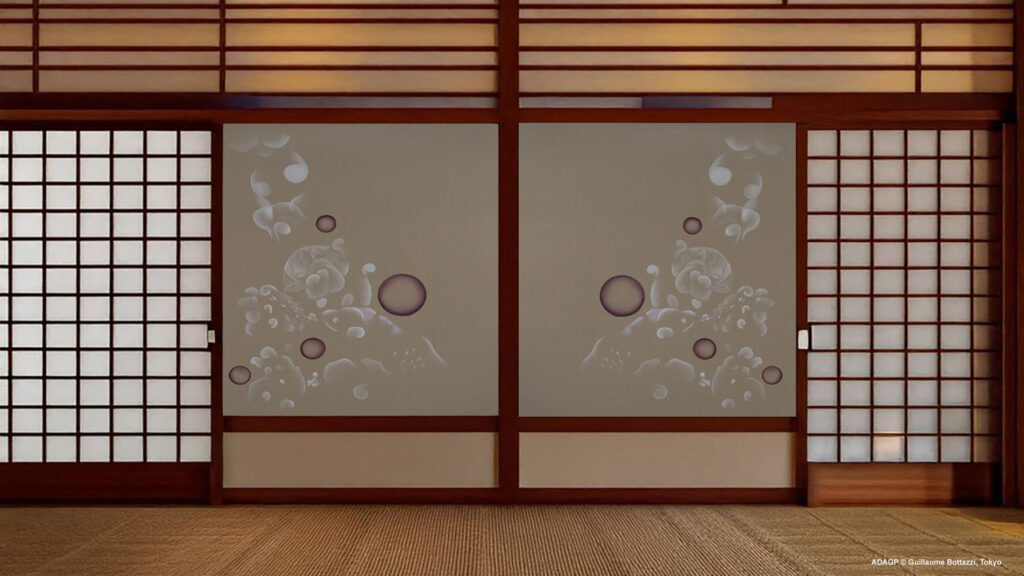
This picture of Guillaume Bottazzi’s exhibition in Miyanomori International Museum of Art in 2011 also show a distinct contrast between the shapes in the art and major architectural elements, such as the frames, the ceiling, the different non- curved sharp angles. The presence of straight elements is not unusual—you may check again your current surroundings.
So, the question arises whether architecture might be an exception of our preference for curvature. To find this out, together with a large network of colleagues from psychology, neuroscience and architecture, we conducted a study in which we asked participants to look at carefully selected images of modern interior architecture spaces. They were asked to evaluate each interior space, and while they did so we recorded their brain activity by means of functional magnetic resonance imaging. We examined “how systematic variation in contour impacts aesthetic judgments and approach- avoidance decisions, outcome measures of interest to both architects and users of spaces alike13”
13 Vartanian, O., Navarrete, G., Chatterjee, A., Brorson Fich, L., Leder, H., Modroño, C., Nadal, M., Rostrup, N., & Skov, M. (2013).
Looking Sharp: Impact of Contour on Aesthetic Judgments and Approach-Avoidance Decisions in Architecture. PNAS (Proceedings of the National Academy of Sciences) 110 (Supplement 2), 10446-10453.
The people who took part in our experiment found the interior spaces with curved contours more beautiful than those composed mostly of straight lines and corners, as in the other aforementioned aesthetic domains. The brain imaging results showed that viewing the curved contour rooms was associated with an increase in activity in the anterior cingulate cortex, a brain region known to respond to the emotional importance of objects and to their rewarding aspects. We were also able to show that participants’ beauty assessment and their concurrent brain activity were driven mainly by pleasantness. From these results we concluded that “the well-established effect of contour on aesthetic preference can be extended to architecture. Furthermore, the combination of our behavioral and neural evidence underscores the role of emotion in our preference for curvilinear objects in this domain.”
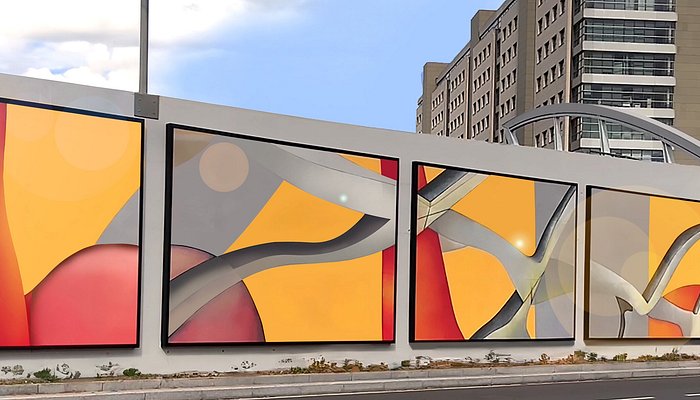
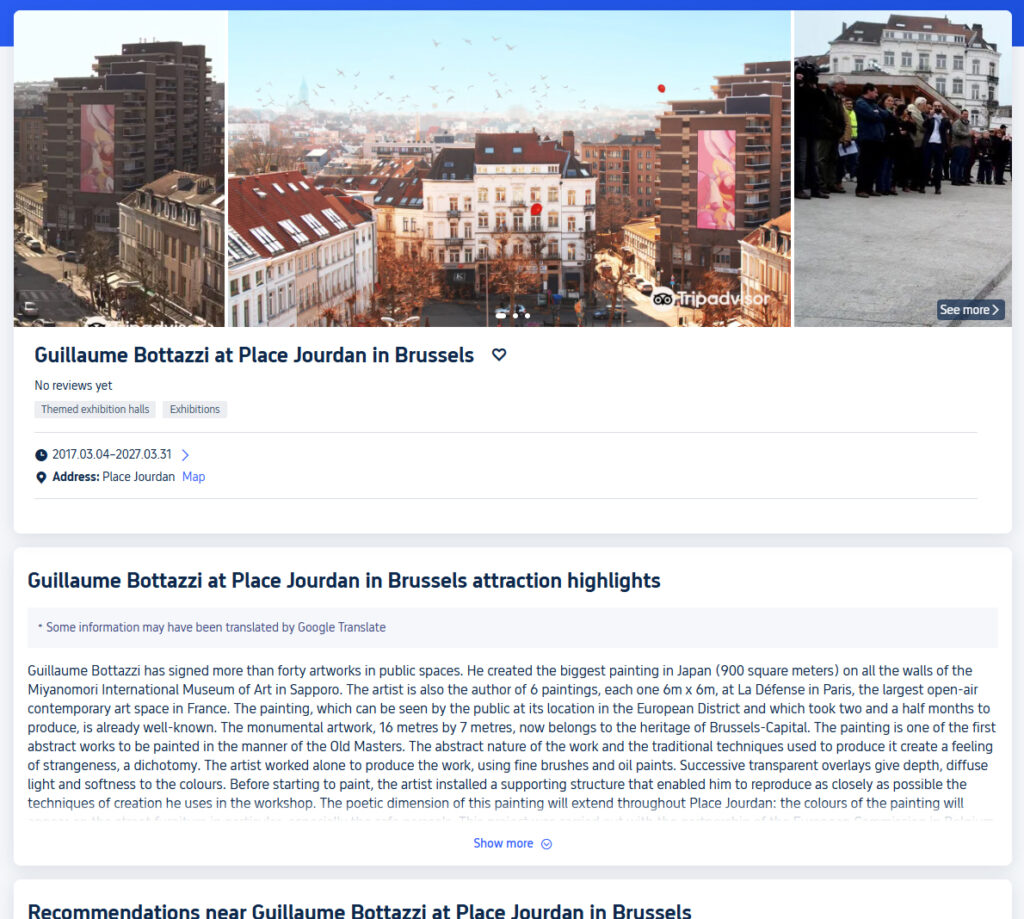
This is what Bottazzi’s work does. Some examples […] show how very straight shapes, cube-like buildings, are camouflaged by the wall paintings of Bottazzi—not only do they bathe the façades with color, they also resolve the shape towards a more pleasing, aesthetically preferred curvature and roundness. In this respect, Guillaume Bottazzi’s interventions are part of a long tradition of using wall paintings to create illusions that do not correspond to an underlying physical structure—as seen, for instance, in baroque architecture or the Spanish art-deco movements, most known through the works of Gaudi.
However, the design of human-made environment could benefit from knowledge and research and insight about the factors that affect people in their living environment. In recent years, we have increasingly taken our research out from the laboratory and in to the streets of Vienna to demonstrate that artistic interventions in public spaces—art as sculpture, as flexible, architectural, and art-adorned “parklets”—can enhance well-being, reduce stress, and create unique aesthetic experiences in the city14. This aligns perfectly with what we already glimpse through Guillaume Bottazi’s art in the examples shown here.
Thus, the perception of art and architecture from a psychological perspective reveals that both produce fascinating objects that bring pleasure through beauty and aesthetic qualities into our everyday life and surroundings. If our thoughts are correct, then you should also be able to receive small doses of pleasure by looking at pictures of—and surrounding yourself by— Guillaume Bottazzi’s art.
Helmut Leder and Marcos Nadal, March 2026 – University of ViennaSpeaker of the interdisciplinary Research Institution Cognitive Science HUB
1. 14 Chana, K., Dehove, M., Mikuni, J., Specker, E., Knoll, A. L., Barrière, T., … Leder, H. (2026). Aesthetic components of urban environments and their relation to wellbeing: a scoping review. Cities & Health, 1–23. ; Mikuni, J., Dehove, M., Fzapf, L., Moser, M., Resch, B., Böhm, P., Prager, K., Podolin, N., Oberzaucher, E., Leder, H. (2024). Art in the city reduces the feeling of anxiety, stress, and negative mood: A field study examining the impact of artistic intervention in urban public space on well-being. Wellbeing, Space and Society, 7. doi: 10.1016/j.wss.2024.10021
In process
When neuroaesthetics takes centre stage in sustainable building
In Bondues, in the Lille metropolitan area, a four-tonne enamelled glass sculpture adorns the landscape. Beyond the energy efficiency expected of a sustainable building, this structure also takes into account the psychological and social well-being of its users.
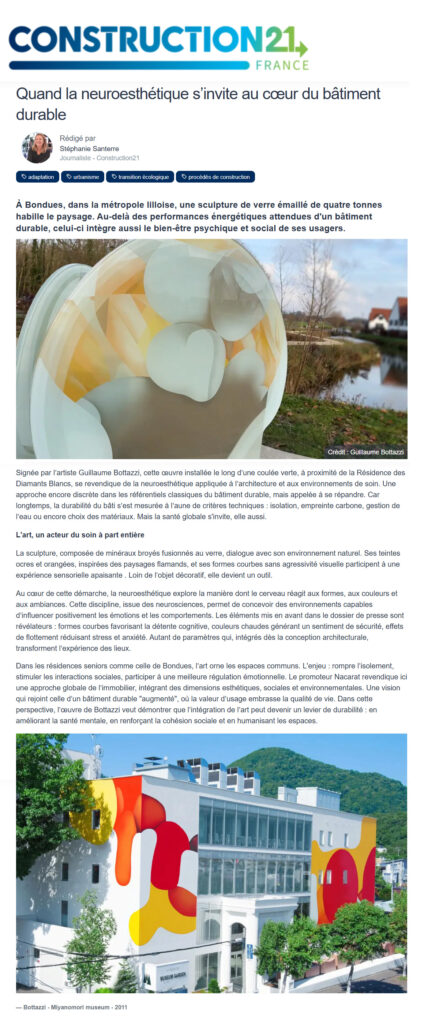
Polyptych by Guillaume Bottazzi
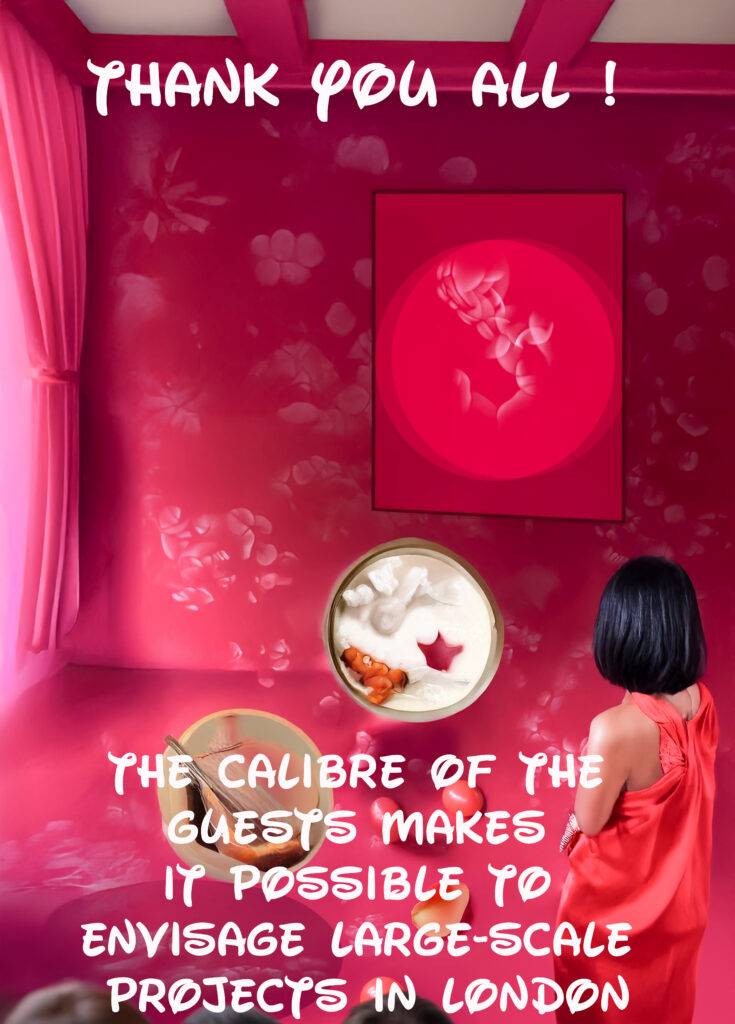
Guillaume Bottazzi’s private viewing in London
Art in situ, Tokyo
Recommandation near Guillaume Bottazzi at Jourdan’s square in Brussels
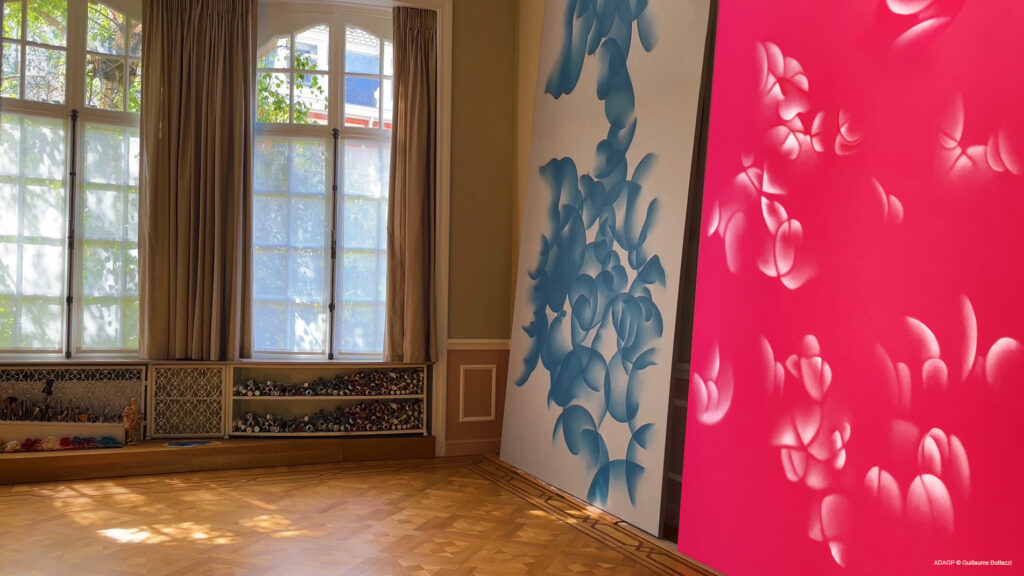
Sculpture in process in Paris

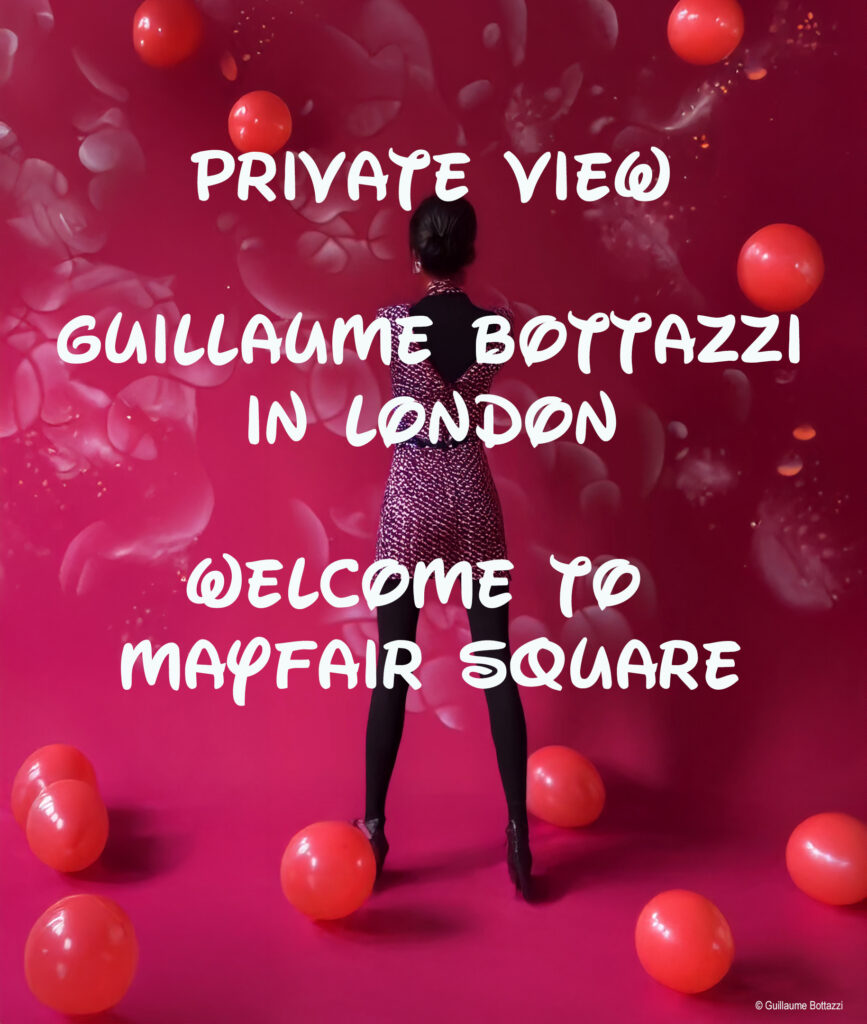
Private view in London